Sculpture (Jimzo)
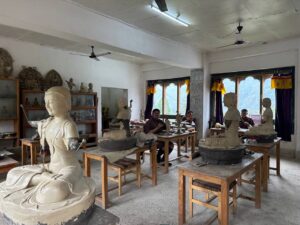
Bhutanese traditional sculpture, known as Jimzo, is one of the 13 traditional arts and crafts of Bhutan, collectively called Zorig Chusum. Jimzo involves creating intricate sculptures, often depicting religious figures, deities, and symbols, using materials such as clay, wood, and bronze.
These sculptures hold deep spiritual significance and are integral to Bhutanese religious and cultural heritage. Artisans follow precise techniques passed down through the generations, preserving this ancient craft. Institutions like the College of Zorig Chusum and the National Institute of Zorig Chusum continue to teach and promote Jimzo, ensuring its continuity and relevance in contemporary Bhutanese society.
The woods used for carving include blue pine, walnut, cypress, and champ, and carvers use a wide range of knives and chisels. Carvers prefer softwood such as blue pine because it is easy to carve, but hardwoods such as champ and walnut are more durable. Today, many carvers use electric router machines to do some of the carving.
Bhutanese carvers also carve designs and motifs on furniture. Traditional tables known as chogdrom (ཅོག་སྒྲོམ་) have carved decorative designs on three sides. High thrones and seats are also adorned with intricate carvings. The altarpiece, called choesham (མཆོག་གཤམ་), is kept in the family shrine, takes the form of a miniature temple, and is often made with many detailed and intricate carvings. Ritual objects such as stupas and phurpa (ཕུར་པ་) daggers are also carved from wood, as are instruments such as damaru (ཌ་མ་རུ་) hand drums, large drums, flutes, and the dramnyen (སྒྲ་སྙན་) lute.
Wood carving is more than just an artistic craft in Bhutan. It is a living tradition that embodies spirituality, identity, and craftsmanship. It plays a crucial role in Bhutanese culture, maintaining a deep connection between architecture, religion, and artistic expression.